In Praise of Honest Critique

“How did you know you could do it?” my friend asks, someone who knew me in former career pursuits, before I began writing novels. I’d always written—broadcast news copy, video scripts, magazine articles, press releases, web pages, PTA newsletters, long and sincere thank-you notes, Christmas letters I hoped were satirically charming. But a novel—sustaining a story over 300 pages—is a different thing altogether. I knew to write that, I would need more than a proofreader to give it the final once-over. And to my great joy, a series of friends, readers, writers, and thinkers have joined me along this writing path—nudging, encouraging, questioning, and pushing me in ways that made my writing better, that let me know I could do this.
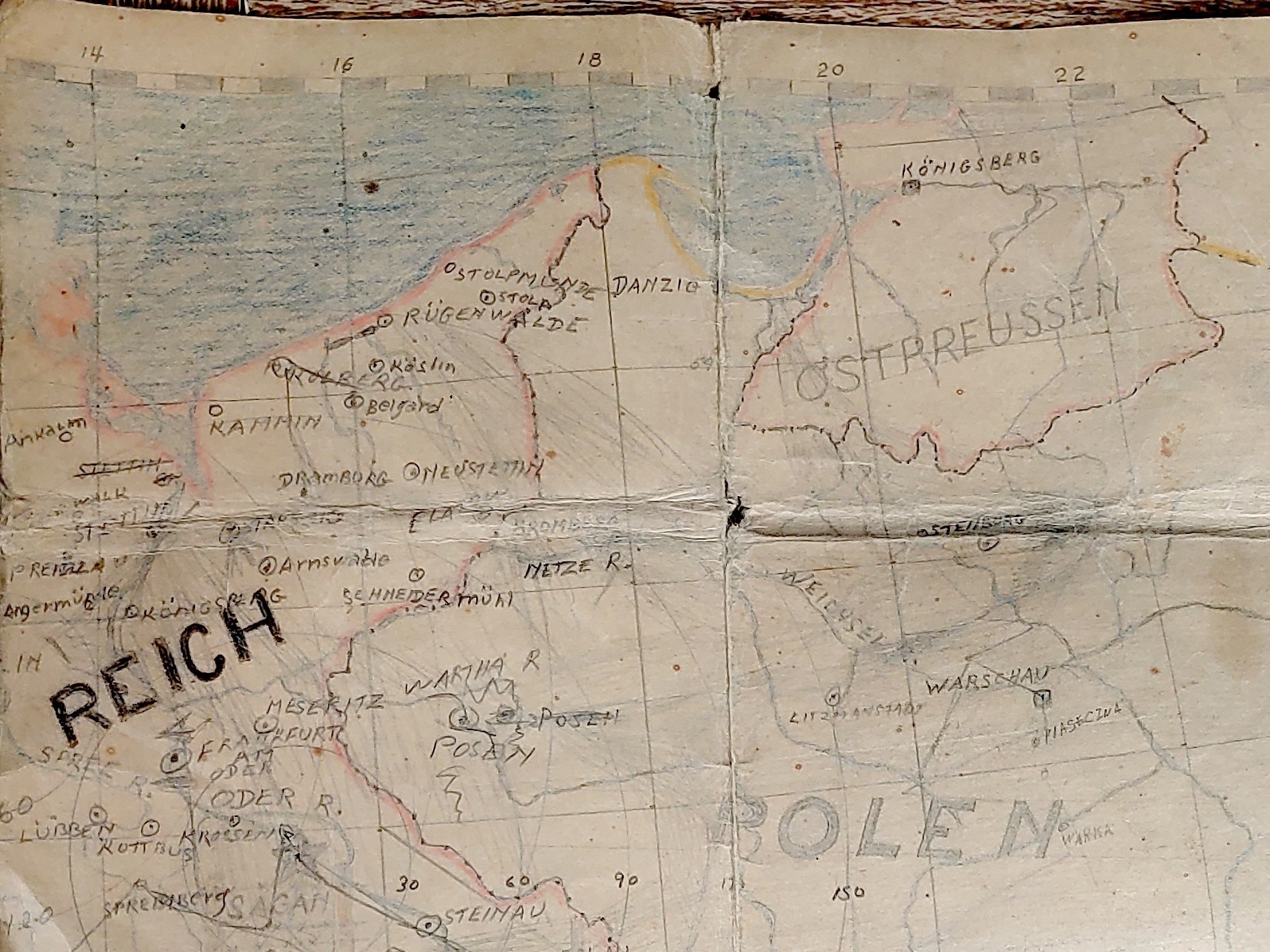
When I began my first novel, War Bonds, I had just left a depleting communications job and was disinclined to dive right back into that world. “I need a breather,” I told my husband, but I didn’t really take one. After he headed off to work each morning, I ducked into my office and began writing a narrative wrapped around stories of World War Two my father had shared. I gathered all the books I had about the war and ordered new ones. I read monographs and academic papers and studied maps, sorting out what kind of story I could tell. After a few weeks, we were out for a walk when I blurted, “I think I’m writing a book.” Was my husband surprised? Not really. A poet and musician himself, he understands when creativity makes demands we must heed. He asked to read it. I quaked. When we got home, I handed him my 80 pages and scooted nervously away. When he finished, I had plot points and technical questions I wanted him to help me solve. He knows a lot about the aircraft of the era. But all he wanted to know was what would happen next. He’d been drawn into the story. A good start, it seemed.
In those days, I was a member of a book club with several especially perceptive readers. We spotted the same plot holes and bristled at the same underdeveloped characters in some of the books we read. So once my manuscript was finished, I asked one of these women to meet for coffee, where I revealed what I’d been up to. She graciously agreed to read my pages, and asked to share them with another reader I didn’t know, whose literary opinion she valued. When the three of us met several months later, I held my breath before they weighed in. But they zipped right past my opening questions—did they like the story? Care about the characters?—to debate where they believed a certain character’s loyalties lay, speaking over each other with evidence from my manuscript to bolster their positions. The characters were real to them. They were rooting for them. They would buy this book. As we parted, they handed over their marked-up drafts, full of things I hadn’t noticed. They helped me see this early draft as just that—a malleable thing that was getting there, that I needed to work a little harder, to shake out the dangles and loose ends. I had thought I’d handed them a finished piece. But because I knew them to be careful, insightful readers, I poured over these marked-up manuscripts, knowing their careful notes, comments, and questions were surely things I needed to solve before I put it in front of other readers.
And that’s how critique works, ideally. Because writing is a solitary thing, encouragement is vital: you need people who believe you have skill. But you also need truth-tellers, reality-testers, and fact-checkers. I remember in the early, early days of American Idol—the Simon-Paula-Randy days—aspiring singers would turn up to audition who, to put it gently, were not ready. Where were their family and friends who might have suggested more practice and preparation? Was there no honest feedback before the audition—or was the honest feedback ignored? We live in a “just do it” culture and a “you can to anything you set your mind to” world. Go for it, by all means. Just do it. But don’t skip the work required before you set off. The encouragers get us off the couch; the naysayers point out what we need to do to get better. We need both.

As War Bonds was going to publication, I signed up for a bona fide critique group at the library for feedback on my new project, The Florentine Entanglement. It was an eclectic group—lots of sci-fi and romantasy, if I’m remembering right—with writers at different stages in their careers. Several made smart suggestions I immediately incorporated into my manuscript. But as the group expanded, it became too big for us to know one another well. Newer members struggled with the rules for interacting with one another’s submissions. “No, no, you’re reading it wrong,” said one writer after a reader offered comments, going on to explain what the submission allegedly communicated. The reader sat back and crossed his arms. “That’s my feedback,” he muttered. “But sure. Do what you want.” These types of interactions led to more surface feedback because who, really, wants to get into a battle at critique group? There’s already too much friction in the world. And what’s that newish expression? If you’re explaining, you’re losing (or something like that). The protocols of some critique groups prohibit back-and-forth conversation to avoid tension like this and because meeting time is limited. Readers weigh in and you listen—even when you’re dying to ask for clarification. So I cast about for a critique group that could dig a little deeper, show me where the holes were, explain what readers would need more of to understand the story.
I’m writing my third work of historical fiction now—this one set in Santiago, Chile, around the time of the military coup in the 1970’s. My research of the era includes the novels of Isabel Allende, the poetry of Neruda, and of course, many non-fiction accounts of the persistent right-wing strand that runs through Chilean history—a strand that led to a brutal dictatorship that lasted seventeen years. The journalistic pull is strong and I tend to do a lot of research, more perhaps than I need to for the purposes of this novel. There’s just so much to learn and understand. So I’m grateful that the critique group I’m in now requires, on a regular basis, that I send what I’ve learned through a fictional lens and get it on paper. This way, I will actually finish writing the book.
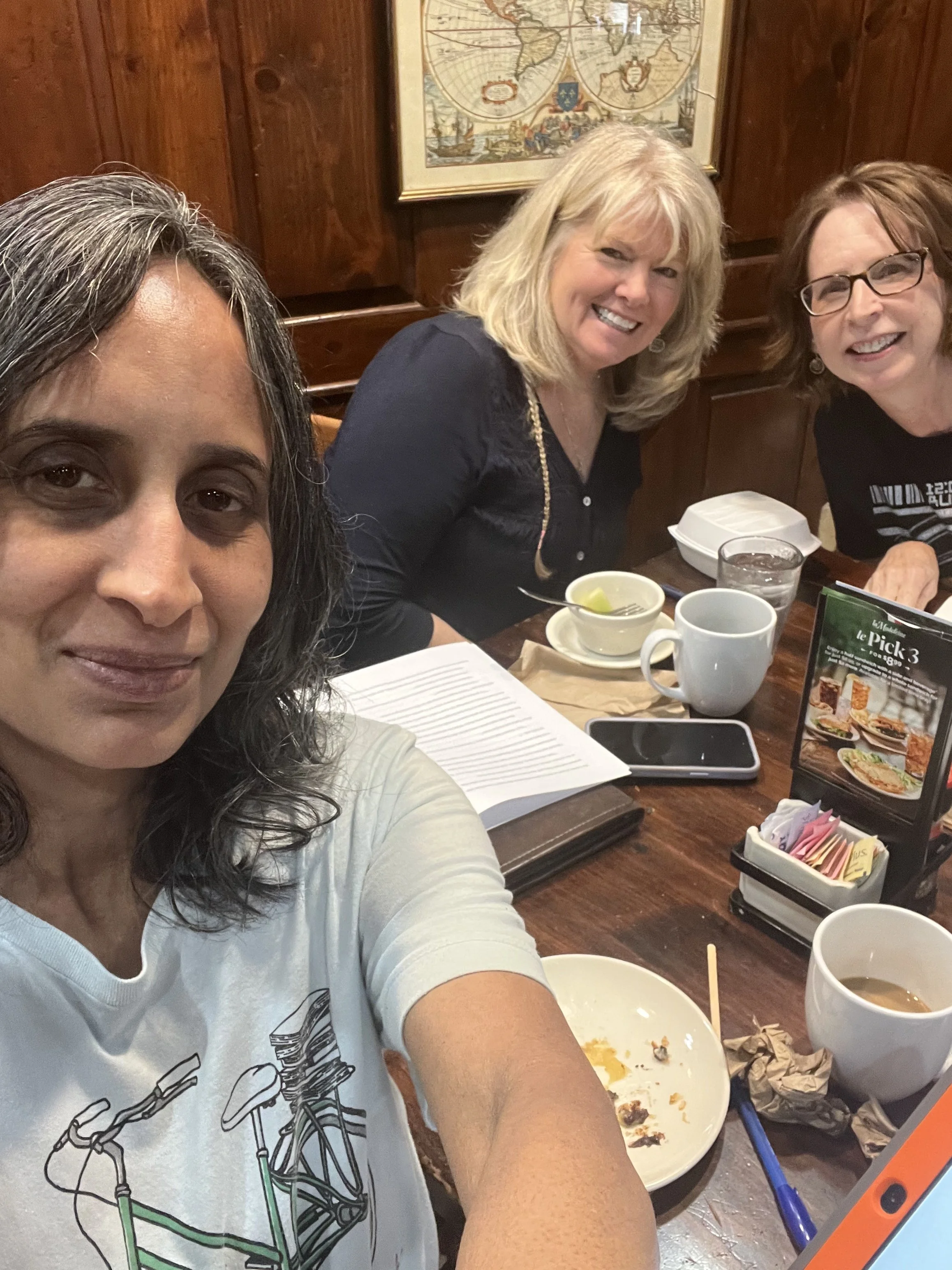
Our group meets once or twice a month. Failing to submit would be rude; my writing peers find time to get twenty pages in good enough shape to share, so I must, too. For the past year, I’ve gathered with a pair of beautiful writers (both onetime writing professors) seeking no pats on the hands for their submissions, no extravagant compliments. Like me, they seek a deep, considered read. We read close and at a distance, catching typos while dissecting if the thing is working—if we buy it, if it sounds true, if we want to read more. Does it work with chapters already presented? Does this need to fall earlier in the book? Later? I’m grateful when their notes to me kindly say “pacing slower here,” instead of “boy, this drags.” I’m grateful when they identify excessive data downloads (the worst habit of historical fiction writers) or suggest I lean into a bit of symbolism more assertively. Had I noticed, I was asked at one meeting, that the male characters in my books all tend to be from the South? No. I had not. Good catch. As writers, we compose phrases we fall in love with. (Just listen to that rhythm and all it evokes!) But as lovely as a phrase might be, if it doesn’t absolutely serve the narrative, it has to go. My critique partners are able to tell me such truths in ways that help me make the tough call. And when I submit a revision, whether it’s now more full and descriptive or slimmed down and pithy, they nod, or scribble a smily face on the page.
What luck to find these book-loving writers who’ve consumed vast libraries, so nimble at drawing literary comparisons that help me understand the whole of literature better. One is writing a memoir—beautiful and disquieting—and the other is writing a gothic tale so rich and compelling, I have dreams about it. To have their honest, unfiltered feedback is a gift.
So if you’re just starting out as a writer, if you’re transitioning, perhaps from the Christmas letter to a novel, might I suggest a good first step. Find readers who enjoy the genre you write and whose feedback you can genuinely receive. A step from there is joining a critique group to draw that feedback circle a bit wider, to hear comments from people you know less-well but still trust. Libraries and local writers’ associations can help you find such groups. From there, you may find a sub-group of writers who have even more to teach you. It’s the tougher critics—even if you disagree with them some of the time—who will do you the most good and help you progress. Workshopping manuscripts like this—revisiting, re-reading, reconsidering—reminds us what we have before us are drafts, not finished books. There are still a million different ways to go to create this story we’ve begun. Good thinking critique partners help us move more confidently into that creative horizon.
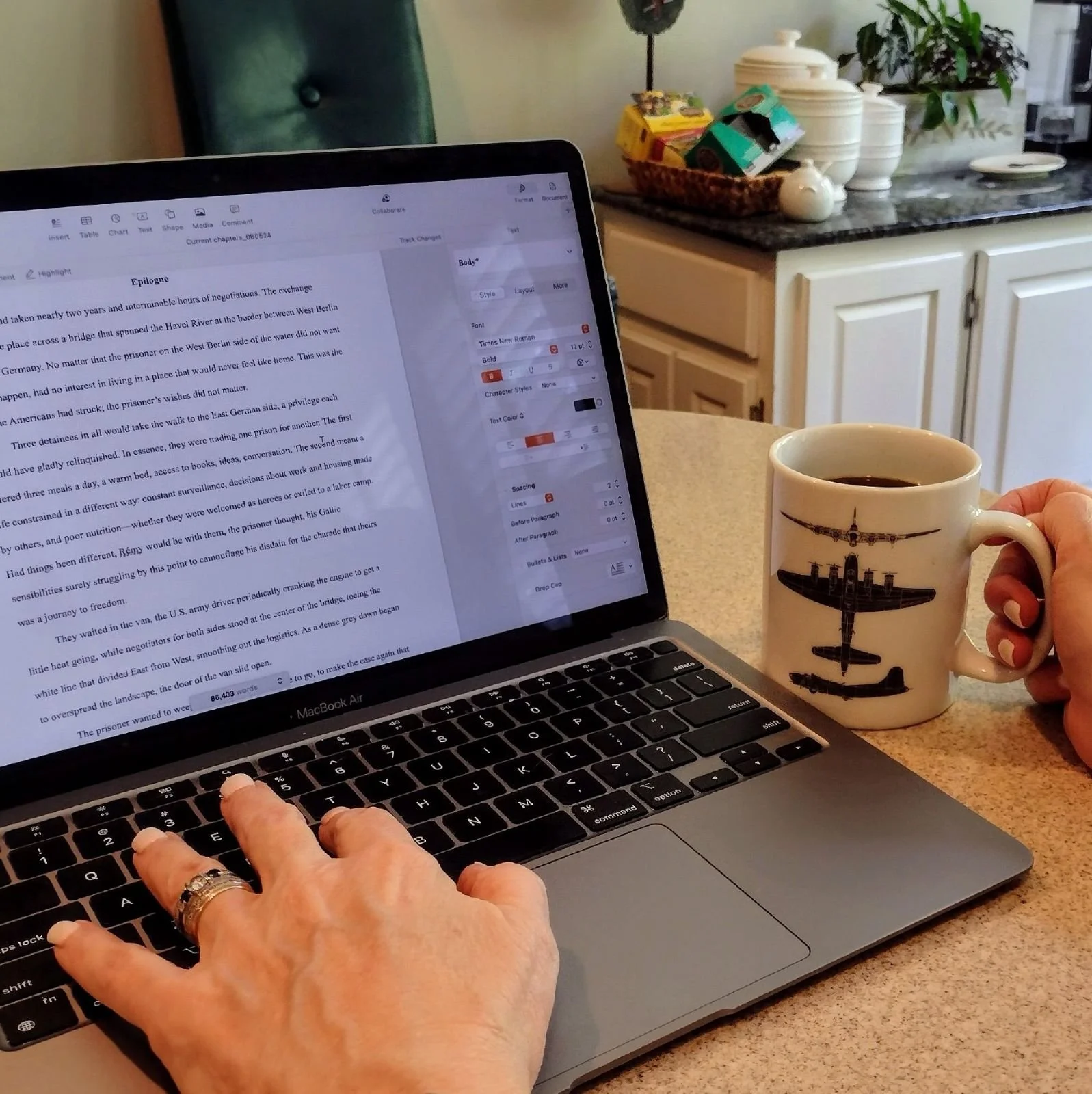
Writing the final lines of
THE FLORENTINE ENTANGLEMENT
—before the eight months of editing!